Several things happened all at once. Or several questions came up, I suppose I should say. One was on the matter of giftedness and its meaning. The next was concerned with the learning of mathematics. The last was about laziness. All of these issues are interconnected in the heart of the unschooling parent, or anarcho-parent, as I am calling myself these days.
Giftedness is but a label, used to distinguish between the varying needs of children/people in institutional environments so as to formulate proper instruction. In the mind of the anarcho idealist/cynic, all that amounts to in the long run is the continued servitude to the system itself. The only reason the labels are necessary is to provide the specialized instruction. With instruction in itself debatable in value, methodology can hardly be determined as appropriate. Right?
Then the matter of learning mathematics and the possibility of never needing them (or at least, higher math) came up. Someone said they felt as though learning higher math was absolutely helpful and necessary so as to understand relevant tasks in life like how to create a budget, create one's own sewing patterns or understand the patterns of others. In this sense, the formal training of higher mathematics was claimed to have empowered one's creativity. Having watched my children build with Lego, K'Nex, and having created my own insane bits of cloth and whatnot without using formal written articulations of geometry, I argued that really the opposite is true: that creativity can empower an understanding of higher mathematics.
I've been handed similar arguments before - that learning basic mathematics and some higher math (algebra, geometry, trigonometry) by rote eventually enables us to understand some of the beauty of advanced mathematics. I thought of an article - which I admittedly never got all the way through - discussing the sorry approach of traditional math education and how it robs us of a deep understanding of the beauty of higher math.
At this point, I lost sight of my argument altogether. Then I read this article illustrating the concept of "by the time you need it, it's too late." And here the crisis set in.
What if we do need to understand how to articulate mathematics? What if I - oh! I mean they of course! - miss the opportunity to discover that naturally (despite Aleks' continued demonstration of his ability to readily understand and use at least basic math concepts)? What if my children count on their fingers or feel ill at ease with numbers or refuse to do their own taxes? What will that mean?
In the midst of this crisis, I confront what I fear is my own laziness - my own desire to do as little as possible, to find easy ways out. I hear other parents comment on the laziness of their children. I see them mentioning fearing the state of their future adult children - the sorry state of their apartments, their inability to finish college or find a spouse. Surely I must be exactly what they fear: the gifted child highly skilled in getting around doing anything nasty or unpleasant, dependent on a man, college dropout...
My husband made a joke the other day about how I'd better not divorce him as I bring so many demands to the table: I don't work (at a paid job), I like sleeping in, I don't cook, and I like to go out a lot. I of course rolled my eyes and said, "yeah, I bring nothing but demands!"
If I take all these simultaneous concerns together and seek out their underlying basis, the question becomes, what is laziness? What constitutes laziness? What do we really need to be doing? What do human children actually, fundamentally require for successful adulthood? What is my definition of my children's success? What the hell am I doing here?
Here is where I struggle to reconcile what I feel to be true, what evidence supports, and the culture that provides my constant context. I struggle even to articulate these matters simply and succinctly. I could babble on for days or weeks - or years if you've ever read my blogs! - trying to determine what this even is, let alone what to do about any of it.
That said, I think that laziness is a perception. That the idea of it comes from a culture of over-work, of under-pay, of implied (forcibly, subversively) scarcity, - a culture where we lock up the food and work people to the bone, devaluing and undermining the invisible labor of raising future workers and creating instead systems that teach but do not nurture, which spend 99% of their effort on maintaining control in a transparent attempt to sustain the institution itself in an everlasting vicious cycle.
I sense this to be true in every turn that I take. The more I learn, the more I loathe the web I feel ever-trapped in. The urge then is to reject it all and run far away. But there's a catch: I am a product of this culture. I cannot divorce myself from this context. I am in some ways merely the sum of my experiences, all of which have been of this culture, this insane capitalist concoction, born of dominance and endless thirst. I too thirst. I am incapable of wholly rejecting every inch of it.
Rejection of everything, too, leaves me directionless and with a confused feeling where I grope around for evidence to support the decisions I make and find little in the way of proof. Therefor I rely on a bizarre, unscientific test: If I lived in the woods, with other people, in a hut, writing cuneiform in the dirt or whathaveyou instead of blogs, what would I and my children need? Not written higher mathematics, in all likelihood.
However, regardless of the need (or lack thereof) of higher mathematics articulated in written form, I still find them somewhat useful in this life; in this context; now. Now is where my children live, unfortunately. Thus my own unscientific test fails me. And my confusion and fear dig deeper.
What to do then? Contrive ways in which we might trick the children into learning higher math? Have faith that Lego and Magformers are enough for now? Or do I do as I usually do and rely on the conversation to lead us there, encouraged onward, no doubt, by my fears and worries pressing in on me in years to come? Is this, then, but finding faith in the constancy of uncertainty?

Showing posts with label unschooling. Show all posts
Showing posts with label unschooling. Show all posts
Tuesday, November 17, 2009


Monday, May 25, 2009
Rabindranath Tagore
We have come to this world to accept it, not merely to know it. We may become powerful by knowledge, but we attain fullness by sympathy. The highest education is that which does not merely give us information but makes our life in harmony with all existence. But we find that this education of sympathy is not only systematically ignored in schools, but it is severely repressed. From our very childhood habits are formed and knowledge is imparted in such a manner that our life is weaned away from nature and our mind and the world are set in opposition from the beginning of our days. Thus the greatest of educations for which we came prepared is neglected, and we are made to lose our world to find a bagful of information instead. We rob the child of his earth to teach him geography, of language to teach him grammar. His hunger is for the Epic, but he is supplied with chronicles of facts and dates…Child-nature protests against such calamity with all its power of suffering, subdued at last into silence by punishment. (Rabindranath Tagore, Personality,1917: 116-17)
Thanks to Patty at Slow Learning for the info on Tagore.
Wednesday, May 20, 2009
On Identifying as an Unschooler and the Online Community
A question was proposed regarding identifying as an unschooler with or without a disclaimer about eclecticism and the precision of non-coerciveness and whether or not we damage ourselves and one another in these constant online battles about what is and is not unschooling. I took a stab...
I think that the identifying as an unschooler is more about what your ideal is than about what your reality is. Ideals are really difficult to articulate in a way that is uniform because we're talking, in the end, about moments, not about philosophy. Philosophy is an ethereal thing, hard to pin down, and each of our unique experiences and perspectives are going to vary the way that we express it.
I often find what I'm literally saying is interpreted to mean something that in my real life it doesn't feel as though it resembles at all. That's the problem with philosophy and the internet. The reason people continue to think and write about life is that we're always finding new ways to articulate the feelings about our lives. We're always trying to discover and pin down what exactly it is, what it feels like, how the big picture might be described. We can't even see the big picture of our lives. It's an imaginary concept. And yet we are compelled to describe it in order to process, to synthesize, to share, to connect, and in large part, to make sense of it all.
Everything must be told in stories. It's how the brain functions. Every face looks like a face, every language is based on the same genetic foundations, and every thing that we learn must be placed into the context of the world as we know it. We follow paths to that end. Those paths are like storylines. There are beginnings and they follow a set sort of route and we meander along it until we come out in the end as a concept, with perhaps a word and a script for the future: Unschooling. Radical Unschooling. On and on we make changes and correct for the reality of our collective experience. We add on and re-decipher and in so doing, argue endlessly. Which is where the question of rigidity in definition comes along.
What I have found is that the moments of my real life cross forth and back between philosophical definitions. In large part, we are radical unschoolers, but there are so many moments where I am not the calm mother, at ease with everything, and there are moments when I say, "Get off the computer! Learn to read! You're going to school!" And in those moments, my rage is so great - so much greater than I am - that I do not even care in the slightest that I have threatened my poor, defenseless sobbing children with school. I feel justified in those moments. I feel doubtful about my chosen path and its legitimate effectiveness in the real world and I feel that my children deserve that wrath and its consequences.
Later, of course, I get over my doubting and apologize and find the justification for my fury in our constant togetherness, my infinite to-do lists, the running about, the lack of funds and support, and the boat-loads of stress sitting all about me, settling, as dust, on all my furniture. And we return to our lives, the steady pace, the ins and outs of requesting an activity, demanding cooperation, and letting them do whatever the hell they please.
Unschooling is not a set of rules. It cannot be. It is an idea - invisible, intangible, and yet it manifests in things, in activities, events, and in the patterns of our lives. It is not entirely to do something. It is to not do something.
We could - and we do - endlessly describe and attempt to construct the minute hypothetical event that may or may not fit within that abstract philosophy, thus to arrive at solid descriptions to comfort ourselves with in our walking about in the world with all its struggle and doubt. These exercises inevitably reassure some of us and plunge others further into doubt. I find that which side of that you fall on depends more on how you've been feeling of late than it does on what you actually do.
I think that the identifying as an unschooler is more about what your ideal is than about what your reality is. Ideals are really difficult to articulate in a way that is uniform because we're talking, in the end, about moments, not about philosophy. Philosophy is an ethereal thing, hard to pin down, and each of our unique experiences and perspectives are going to vary the way that we express it.
I often find what I'm literally saying is interpreted to mean something that in my real life it doesn't feel as though it resembles at all. That's the problem with philosophy and the internet. The reason people continue to think and write about life is that we're always finding new ways to articulate the feelings about our lives. We're always trying to discover and pin down what exactly it is, what it feels like, how the big picture might be described. We can't even see the big picture of our lives. It's an imaginary concept. And yet we are compelled to describe it in order to process, to synthesize, to share, to connect, and in large part, to make sense of it all.
Everything must be told in stories. It's how the brain functions. Every face looks like a face, every language is based on the same genetic foundations, and every thing that we learn must be placed into the context of the world as we know it. We follow paths to that end. Those paths are like storylines. There are beginnings and they follow a set sort of route and we meander along it until we come out in the end as a concept, with perhaps a word and a script for the future: Unschooling. Radical Unschooling. On and on we make changes and correct for the reality of our collective experience. We add on and re-decipher and in so doing, argue endlessly. Which is where the question of rigidity in definition comes along.
What I have found is that the moments of my real life cross forth and back between philosophical definitions. In large part, we are radical unschoolers, but there are so many moments where I am not the calm mother, at ease with everything, and there are moments when I say, "Get off the computer! Learn to read! You're going to school!" And in those moments, my rage is so great - so much greater than I am - that I do not even care in the slightest that I have threatened my poor, defenseless sobbing children with school. I feel justified in those moments. I feel doubtful about my chosen path and its legitimate effectiveness in the real world and I feel that my children deserve that wrath and its consequences.
Later, of course, I get over my doubting and apologize and find the justification for my fury in our constant togetherness, my infinite to-do lists, the running about, the lack of funds and support, and the boat-loads of stress sitting all about me, settling, as dust, on all my furniture. And we return to our lives, the steady pace, the ins and outs of requesting an activity, demanding cooperation, and letting them do whatever the hell they please.
Unschooling is not a set of rules. It cannot be. It is an idea - invisible, intangible, and yet it manifests in things, in activities, events, and in the patterns of our lives. It is not entirely to do something. It is to not do something.
We could - and we do - endlessly describe and attempt to construct the minute hypothetical event that may or may not fit within that abstract philosophy, thus to arrive at solid descriptions to comfort ourselves with in our walking about in the world with all its struggle and doubt. These exercises inevitably reassure some of us and plunge others further into doubt. I find that which side of that you fall on depends more on how you've been feeling of late than it does on what you actually do.
Monday, May 4, 2009
Media Is Not Creative
I have always had a tenuous relationship with electronic media. I enjoy it quite a bit, sometimes gluttonously so, but was definitely wary of how my children related to it. Aleks loved television quite a bit from a young age, which was not what I wanted, but I was hardly motivated to do anything to distract him.
I liked to be in the house, often on the computer, engaging in online message boards and blogging: the best way, as a young mother, to find information that was in keeping with my core values, to think about parenting and political conundrums or issues of psychological, social, or spiritual significance, or to simply find a sense of community. It's sad really, but then travel with a baby or toddler (and for some time while exhausted from a second pregnancy) is exhausting and often difficult. Better to just stay home.
Not to mention the fact that when Aleks was but ten days old, we moved from near my family to 2000 miles away. When he was 2, we moved to within four hours of family, but the distance was of little difference. Women were not intended to be alone at home with their children without support. The nuclear family does not work and community takes time and considerable effort to build from scratch. It's no wonder that we, as a culture, rely so heavily on electronic media as a babysitter. Our culture has been created around it, and now depends on it to function as it does. If televisions disappeared, the economy would collapse.
After Bastian's birth, we did disappear our television. Luckily, by then, we had computers, so the effect was minimal. Instead of watching PBS all day, Aleks learned to operate the DVD drive and how to point and click. But at least it had some modicum of interaction involved. One had to find the media and use it with intention. There was no more simple passively receiving information and entertainment. Which is not to entirely demonize television. When we visit my parents, we love the TV, but we don't need it at home and it's hard for us to not rely on it heavier than I would like.
I go back and forth on the matter. My children use the computer to watch movies, play video games, and look things up (including, but not limited to leopard geckos, Tom and Jerry cartoons, Bakugan toys, Lego sets, the Thriller video, aye-ayes, hypnotism instructions, and timelines of prehistory). Most of Aleks' reading skills come from Googling things.
But then they get sucked into some cartoon for 48 hours straight, watching the same episodes on Cartoon Network's website over and over again, while I'm in some late-winter funk, paying bills and doing laundry, and I get a little sick of it all. I begin to feel like it's all they ever do and they'll never learn to read or do anything truly fantastic like all those homeschooling prodigies that build working robots and play Mozart before their 7th birthdays.
And the advertising! Oh the advertising! The McDonald's Happy Meal commercials and Aleks' desire for ridiculous toys he would never ever desire to own were it not for constant marketing. It's the machine working its way into my living room! And it sucks! All the character merchandise out there, its cheap plastic manufacture filling up all those coal-burning factories in China, creating new first-world economies to further the environmental degradation of a globalized world culminating in a worldwide post-industrial wasteland! It all runs counter to my values in so many ways...
Then I think of all of history, the re-use of characters and archetypes throughout time - through mythology and religion and campfire stories. I think of my brief addiction to Harry Potter fanfic a few years back, and I remember that the people creating these stories are not necessarily simply seeking to sell something, that there are creative people behind some of our favorite shows, who just want to draw for a living, to have a fun job where they can still support themselves. The artists behind these creatures aren't bad people. They're just trying to make a go of it like everyone else. And as an artist, I can appreciate that.
And then my son borrows from these artists and does things I wouldn't have thought of. Like building this robot after watching an episode of Curious George.

And creating these cutouts of Zak Saturday and Zak Monday after fixating for the last several days on The Secret Saturdays, a show on Cartoon Network. Not only that, but Aleks dictated two lengthy letters to Santa about wanting a real version of the Zaks' tools - the Fang and the Claw - for he and his brother, along with costumes. Today he spiked his hair like Zak and wanted me to dye it as well as paint his skin brown to look like Zak (which resulted in a lengthy kitchen discussion about racial politics in America from Plymouth Rock to the present).
Aleks also drew the associated high tech, magic, and mythical gadgets the Saturdays use in their travel as cryptozoologists, trying to protect the world from knowing about cryptids. He's carrying them all around in his Lego box: To decipher all this, I made a guide based on Aleks' explanations:

Then I wonder, what is the difference, really, between Aleks taking the ideas in these shows and making something of his own out of the things around him and his learning to draw dragons from a book about drawing dragons that we checked out from the library? Aren't both instances where someone else's art is being borrowed to create something new? And don't both instances result in my child exploring new methods of creativity?

I liked to be in the house, often on the computer, engaging in online message boards and blogging: the best way, as a young mother, to find information that was in keeping with my core values, to think about parenting and political conundrums or issues of psychological, social, or spiritual significance, or to simply find a sense of community. It's sad really, but then travel with a baby or toddler (and for some time while exhausted from a second pregnancy) is exhausting and often difficult. Better to just stay home.
Not to mention the fact that when Aleks was but ten days old, we moved from near my family to 2000 miles away. When he was 2, we moved to within four hours of family, but the distance was of little difference. Women were not intended to be alone at home with their children without support. The nuclear family does not work and community takes time and considerable effort to build from scratch. It's no wonder that we, as a culture, rely so heavily on electronic media as a babysitter. Our culture has been created around it, and now depends on it to function as it does. If televisions disappeared, the economy would collapse.
After Bastian's birth, we did disappear our television. Luckily, by then, we had computers, so the effect was minimal. Instead of watching PBS all day, Aleks learned to operate the DVD drive and how to point and click. But at least it had some modicum of interaction involved. One had to find the media and use it with intention. There was no more simple passively receiving information and entertainment. Which is not to entirely demonize television. When we visit my parents, we love the TV, but we don't need it at home and it's hard for us to not rely on it heavier than I would like.
I go back and forth on the matter. My children use the computer to watch movies, play video games, and look things up (including, but not limited to leopard geckos, Tom and Jerry cartoons, Bakugan toys, Lego sets, the Thriller video, aye-ayes, hypnotism instructions, and timelines of prehistory). Most of Aleks' reading skills come from Googling things.
But then they get sucked into some cartoon for 48 hours straight, watching the same episodes on Cartoon Network's website over and over again, while I'm in some late-winter funk, paying bills and doing laundry, and I get a little sick of it all. I begin to feel like it's all they ever do and they'll never learn to read or do anything truly fantastic like all those homeschooling prodigies that build working robots and play Mozart before their 7th birthdays.
And the advertising! Oh the advertising! The McDonald's Happy Meal commercials and Aleks' desire for ridiculous toys he would never ever desire to own were it not for constant marketing. It's the machine working its way into my living room! And it sucks! All the character merchandise out there, its cheap plastic manufacture filling up all those coal-burning factories in China, creating new first-world economies to further the environmental degradation of a globalized world culminating in a worldwide post-industrial wasteland! It all runs counter to my values in so many ways...
Then I think of all of history, the re-use of characters and archetypes throughout time - through mythology and religion and campfire stories. I think of my brief addiction to Harry Potter fanfic a few years back, and I remember that the people creating these stories are not necessarily simply seeking to sell something, that there are creative people behind some of our favorite shows, who just want to draw for a living, to have a fun job where they can still support themselves. The artists behind these creatures aren't bad people. They're just trying to make a go of it like everyone else. And as an artist, I can appreciate that.
And then my son borrows from these artists and does things I wouldn't have thought of. Like building this robot after watching an episode of Curious George.

And creating these cutouts of Zak Saturday and Zak Monday after fixating for the last several days on The Secret Saturdays, a show on Cartoon Network.
 Not only that, but Aleks dictated two lengthy letters to Santa about wanting a real version of the Zaks' tools - the Fang and the Claw - for he and his brother, along with costumes. Today he spiked his hair like Zak and wanted me to dye it as well as paint his skin brown to look like Zak (which resulted in a lengthy kitchen discussion about racial politics in America from Plymouth Rock to the present).
Aleks also drew the associated high tech, magic, and mythical gadgets the Saturdays use in their travel as cryptozoologists, trying to protect the world from knowing about cryptids. He's carrying them all around in his Lego box:
 To decipher all this, I made a guide based on Aleks' explanations:
- Alonium Death Warmth Venom
- Fang Booster
- Smoke Mirror
- Snow Crystal
- Claw Booster
- Kamari Kandem Demon
- Alkali Horn
- Person Controller
- Cortex Destructor
- Power Glove
- Kur Stone
- Fang
- Claw
- Electrocute Collar
- Methuselah Tree Sap Flower
- Shocking Glove
- Kamari Kandem Medallion
- Map to Tomb's Kur
- Atmosphere Jellyfish Controller Video Game
- Salt Crystal
- Dragon Arm
- Dragon Arm
Then I wonder, what is the difference, really, between Aleks taking the ideas in these shows and making something of his own out of the things around him and his learning to draw dragons from a book about drawing dragons that we checked out from the library? Aren't both instances where someone else's art is being borrowed to create something new? And don't both instances result in my child exploring new methods of creativity?

Friday, March 27, 2009
The Unschooling Co-op
In discussing the rigidity of homeschooling co-ops, some friends and I (while dyeing eggs with plant materials whilst our children ran amok and feigned a slight participation) wondered what an unschooling co-op would look like. I thought it would be just like what we do anyway. On Tuesdays, we get together at my house for "Art Day" and only sometimes ever make art. Instead, the children play and discuss and scheme and whatever else it is the children do. On Fridays, we get together at another woman's house for "Lego Club" and only sometimes ever build with Lego. Instead, the children play and discuss and scheme and whatever else it is that children do. Meanwhile, the mothers might make a craft or celebrate a holiday or simply drink tea and chat about how stressful things have become (despite all our time spent making crafts and drinking tea) or about unschooling and rigidity in things that are not unschooling.
On Friday, instead of building with Lego, we made lots of dyes from plant materials (clockwise from top right): turmeric, onion skins, beets & red cabbage, and blueberries. We also used some old liquid chlorophyll I had but couldn't stomach (it was minty and salty! blech!!!) to make some green. We used about a quart of liquid for each pot plus two tablespoons of white vinegar for mordant. After the dyes boiled for a long time, we poured them in bowls so the children could dip eggs in cooled liquid. Dyeing the eggs raw in the boiling materials produced the darkest results and also the most edible eggs. We also tried pre-hard-boiled eggs which became rubbery and inedible if boiled again and produced light colors if dipped in cooled dyes.

On Friday, instead of building with Lego, we made lots of dyes from plant materials (clockwise from top right): turmeric, onion skins, beets & red cabbage, and blueberries. We also used some old liquid chlorophyll I had but couldn't stomach (it was minty and salty! blech!!!) to make some green. We used about a quart of liquid for each pot plus two tablespoons of white vinegar for mordant. After the dyes boiled for a long time, we poured them in bowls so the children could dip eggs in cooled liquid.
 Dyeing the eggs raw in the boiling materials produced the darkest results and also the most edible eggs. We also tried pre-hard-boiled eggs which became rubbery and inedible if boiled again and produced light colors if dipped in cooled dyes.
Thursday, March 26, 2009
Examples of Socialization
The most prevalent argument against homeschooling has always been the question of socialization. When we say it, we imagine that homeschooled children are sheltered from making friends and learning the knocks of life in the big bad world where playground bullies roam free and important, lasting relationships are made over the sharing of half-pint chocolate milk at the lunch table. We assume that these experiences are essential to life in This Modern World, that they teach us more than we could learn elsewhere. I don't believe that this is what we're really talking about when we discuss socialization, however.
Socialization in the school setting is about becoming socialized not about socializing; about becoming integrated and acculturated to doing things institutionally. Doing things institutionally is about learning how to follow rules, be obedient, lower your expectations, and exist in a culture of scarcity: scarcity of attention, resources, space, and love. This is what we're really teaching in school: how to exist in a box, not how to think outside of it or throw the whole damn thing away. This serves our culture, it does not challenge it.
In a culture of consumption, of specialization, of independence over inter-dependence, we end up emphasizing the very things we try to "teach" out. Diversity training doesn't actually get down to the dirty work of dismantling systems of oppression that keep people in poverty, in line, and out of the way. Which is not to imply counterproductivity, just that the whole picture is fundamentally flawed. We provide quick fixes that create minimal progress to all-encompassing problems. The problem is the entire system, not these small parts.
But what can we do? We are but small people trying to fight massive, invisible structures. One step is to practice peace in our private lives and continue the fight as best we can. Practicing peace oddly takes a bit of imagination. Imagine a world where we met all kinds of people - some we like, some we don't like - through all kinds of activities, but without the institutional structures that create and sustain hierarchy, where reward and punishment are so wrapped up in the daily existence that they become necessary and inevitable and create competition constantly. Competition for space, attention, resources, love... Competition that results in constant anger, jealousy, rejection, sadness, envy, rage...
Imagine a world where we were all just living, working, cooperating and collaborating as need be, drawn to positive relationships, in which the incentive is to resolve conflict well by stating and respecting one another's needs and desires in order to sustain the relationship. Imagine if a child's world were just your life with your friends, family, and your sometimes-enemies and your frenemies and the people you hardly know, who are maybe a little weird, but you need to work with so you learn to ignore the quirks or even appreciate them and get on with it. What would you learn from that? If you talked to the garbage man and the postal woman and the coffee shop girls and the doctors you see and your parents' friends and the folks at the library and saw your parents living and working and getting along as best they can, finding ways to figure out what to do with anger over conflict and how to fix things.
Because that's my life. I have to deal with my neighbor and I'm angry with her, but we resolve the conflict and my children witness that. That's pretty true of all our relationships and almost all of my kids' interactions with adults are positive. Which means that they feel supported to be who they are and to love who and what they love. There's no self-doubt.
Imagine a world where a three-year-old teaches a 27-year-old neighbor interested in Heavy Metal and neuroscience to play Connect Four (and how to win by manipulating the rules).
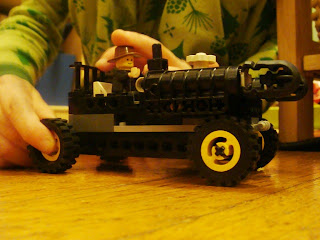
 Imagine a world where a 23-year-old blues guitarist and a 6-year-old artist both love Star Wars and spend time building Lego cars together.
 Welcome home to socialization that is respectful, mutual, collaborative, and creative.
Socialization in the school setting is about becoming socialized not about socializing; about becoming integrated and acculturated to doing things institutionally. Doing things institutionally is about learning how to follow rules, be obedient, lower your expectations, and exist in a culture of scarcity: scarcity of attention, resources, space, and love. This is what we're really teaching in school: how to exist in a box, not how to think outside of it or throw the whole damn thing away. This serves our culture, it does not challenge it.
In a culture of consumption, of specialization, of independence over inter-dependence, we end up emphasizing the very things we try to "teach" out. Diversity training doesn't actually get down to the dirty work of dismantling systems of oppression that keep people in poverty, in line, and out of the way. Which is not to imply counterproductivity, just that the whole picture is fundamentally flawed. We provide quick fixes that create minimal progress to all-encompassing problems. The problem is the entire system, not these small parts.
But what can we do? We are but small people trying to fight massive, invisible structures. One step is to practice peace in our private lives and continue the fight as best we can. Practicing peace oddly takes a bit of imagination. Imagine a world where we met all kinds of people - some we like, some we don't like - through all kinds of activities, but without the institutional structures that create and sustain hierarchy, where reward and punishment are so wrapped up in the daily existence that they become necessary and inevitable and create competition constantly. Competition for space, attention, resources, love... Competition that results in constant anger, jealousy, rejection, sadness, envy, rage...
Imagine a world where we were all just living, working, cooperating and collaborating as need be, drawn to positive relationships, in which the incentive is to resolve conflict well by stating and respecting one another's needs and desires in order to sustain the relationship. Imagine if a child's world were just your life with your friends, family, and your sometimes-enemies and your frenemies and the people you hardly know, who are maybe a little weird, but you need to work with so you learn to ignore the quirks or even appreciate them and get on with it. What would you learn from that? If you talked to the garbage man and the postal woman and the coffee shop girls and the doctors you see and your parents' friends and the folks at the library and saw your parents living and working and getting along as best they can, finding ways to figure out what to do with anger over conflict and how to fix things.
Because that's my life. I have to deal with my neighbor and I'm angry with her, but we resolve the conflict and my children witness that. That's pretty true of all our relationships and almost all of my kids' interactions with adults are positive. Which means that they feel supported to be who they are and to love who and what they love. There's no self-doubt.
Imagine a world where a three-year-old teaches a 27-year-old neighbor interested in Heavy Metal and neuroscience to play Connect Four (and how to win by manipulating the rules).
 Imagine a world where a 23-year-old blues guitarist and a 6-year-old artist both love Star Wars and spend time building Lego cars together.
 Welcome home to socialization that is respectful, mutual, collaborative, and creative.
Tuesday, January 13, 2009
In Which the Children Take All the Credit
All day long it was the path to righteous housewifery - the plan was a new playgroup/artgroup/open house gig for the homeschool group, but it was organized just yesterday and thus did not pan out. In the meantime, I'd taken up cleaning everything in sight yesterday and had it continue into today to be finished up in the event of strangers desiring to make origami with us. I interspersed the cleaning frenzy with sitting on my bum at the computer, naturally, just as the boys interspersed their watching movies and playing video games with wrestling on the couch and building things in the bedroom. We all self-regulate to some degree.
After dusting and sweeping and washing and laundering, I added baking bread and homemaking noodles to the pile. They rested for an hour whilst I moved the couch and swept beneath it, then facebooked a bit more. Then it was kneading and rolling and getting out the stock I made and the chicken I froze for the noddle soup I should really make a large pot of for storage for when we eventually get sick. Instead, it will be crusty whole wheat bread from the ludicrously titled What You Knead and the delicious and nutritious locally grazed chicken soup.
And just as I was ready to crown myself the goddess of domesticity, my children ran in, after so many hours of merely and unabashedly consuming media whilst I ignored them, to stir the soup, as though they'd made it all along.

All of this brings up lots of questions - why the quest for supermomdom? Why the unchecked availability to media? What happened to the origami? Does this indicate a falsity about previous photographs of children doing activities? Oh, such touchy subjects...
Why the quest for supermomdom? I don't know! What is it that drives me to do more than is humanly possible? How does it work really? I haven't real answers to these questions, only speculation. I can only say that there is pressure from the world in all its varying nooks and crannies - magazines, books, spouses, neighbors, family members, and good lord, worst of all, the internet with all its kagillion alcoves of philosophical aspirations divorced from their real-life joyless drudgey struggle. Somehow all these little morsels of judgment about what is good, bad, or evolutionarily appropriate get planted in my head by way of scientific studies released and random things women write on message boards and they drill their way in like so many insects and intersect with vulnerable bits of life experience and make me think that chicken stock is good, that olive oil is preferable to canola due to the heightened levels of monounsaturated fats, and to worry endlessly about the estrongenic qualities of processed soy, though I'm not entirely certain what any of that actually means, cause me thus to believe that the homemade stock with the veggie-fed local Amish chickens and the organic carrots bought bare, not in a bag, and the homemade noodles made of organic, unbleached white flour bought in bulk at the co-op where I volunteer and carried home in the unbleached cotton bulk bag will somehow make me superior in greenness and responsibility perhaps not to the world, but to some former version of myself and thus help in its small little way to save the world for all the future carriers of my bits of DNA. Not only that, but that the nutrition gained from such toil will help my children to pass on those bits of DNA.
Before I became a mother, I never much thought about my DNA. Double helixes in general, in science class and the like, sure, but not my DNA, what it might say or do. And certainly I never before motherhood considered my DNA with such affection and concern. Never before did I imagine my DNA as actual people, crushed by supervolcanoes or under the bootstomp of fascist oppression, created from the turmoil of infrastructure collapsed by the melting glaciers that flooded the Atlantic Ocean with fresh water and turned the current, making Europe a desert and drowning the Statue of Liberty like some Roland Emmerich film.
Does me having a spotlessly clean home and homemade chicken noodle soup (and bread!) actually hold back that tide? Of course not. Do I even actually imagine all that as I go through my day, making out To-do lists in my daily planner (bought from an anarchist collective in Berkeley, no less)? Of course not. Nonetheless, if I dig deeply enough - which does not seem too difficult to do as I write here now - I find that the reasons for all of it - for my continued heartbeat, my breaths in and out, the monstrous goals I set for myself as a person to somehow fulfill lifelong dreams and secrets - is but to insure that my children lead the most fascinating, world-changing, fulfilled lives possible.
And so I strive endlessly and with great difficulty to be the best mom I can - that warped version of all the tiny ideas and bits of speculation that have wormed their way inside me and tied themselves with each of my neurons to form this bizarre, many-headed creature with forked tongue best for licking wounds and several thousand arms for stroking, cradling, picking, pressing, ordering... And on days like this, I get a better glimpse of her than usual. It would be best for us all, though, to realize that my ability to accomplish all the things I wish to accomplish - those things just for me, those for the home and husband and hearth and those for the children with their physical, emotional, psychic, and educational needs - that though in general, and certainly by the looks of this blog, I seem able to attempt at least small bits of all of it (perhaps not well, but at least all of it), the truth is more that I fulfill needs in the same way that a toddler eats.
Most parents have been there with the child who won't eat or seems to not eat enough or at least not the things we desire them to eat and some pediatrician or wise mother of an older child or some random mama being catty on a message board lets us know that our children will gain enough of what they need over more time than the course of a day. If only we look at the entire week, we will see that their need to eat six oranges one day is perfectly complemented with their devouring of two chicken breasts on another. It's like when Frances Moore Lappé let the vegetarians know that we no longer had to always eat beans with rice, but that we could rest assured that we'd get all our partial proteins completed over the course of a day or so, meeting our nutritional needs appropriately.
This is how I am with accomplishing all that I wish to and addressing the needs of all four of us plus the house. Some days I take the children out and about to socialize and run and play and some days we stay in and the floors get scrubbed (except that's a lie as the floors never get scrubbed because I can never get all the toys and all the dirt off of them in order to break out a bucket and still have time for supper). Still others, I spend most of my time alone without children, feeding myself and my nutritionally-challenged psyche.
This also partially explains the rationalization for unchecked media consumption: we just don't do it every day. Though honestly, we do it many days. It is something I struggle with. We do not own a television, but in the age of the internet and DVD-drives, this does not ultimately matter at all. I have found myself confronting my own habits with the computer and those of my husband when questioning the virtue of the habits of my children. In that confrontation, I have found that I am a perfectly reasonably motivated adult even with my extensive time spent online. I cannot formulate a reason why my children should be denied something I allow myself. Equally, it is ultimately my responsibility to provide something worth distracting them from the computer with if it is really bothering me and I, in my infinite laziness (ha!), choose not to.
The other, more provocative truth is that my ideal would be far different than this. My ideal would be that the boys run amongst gaggles of boys through field and through forest, learning the world of boys as they are evolved to. Unfortunately, I live in modern America with its cities and its mindless consumption and the commodification of all things and that ideal is simply not something I am able to purchase. I live away from my family. I live in a city neighborhood where cars drive much faster than the posted twenty-five miles per hour, where our backyard is asphalt, and we must drive to find a grouping of trees more than a few feet wide. I allow the endless consumption of media because my choices are very, very limited.
Thus, I did not accomplish the origami. It was merely an activity in holding for the potential homeschoolers dropping by. They did not come, so we will do origami another day. I can imagine that my children will have little interest in the origami anyway. They will watch, perhaps, as I make the eighteen folds necessary for a crane, the only thing I know how to do after having folded several hundred for a play I stage-managed eleven years ago. Then they will fold a few bits of paper a few times, crumple them at their feet and run off to do something they know how to do: play video games, build Lego, imagine blocks and dinosaurs fighting with one another to escape the zombie hoards... But you, dear reader, will imagine something far more interesting with the way I will present it. There will be photos of Aleks at the children's table, his lips pursed in concentration over his metallic paper as he makes a crease, and of Bastian holding up a paper crane with a great smile, the afternoon light twinkling in his eye. The image will present time frozen, as if this activity lasted hours, just as all the photos in this blog have. The reality is likely much sadder, unless otherwise noted. The particularly educational activities seem to last the least amount of time - a discussion of prehistoric fish melds quickly into talk of some cartoon or a tantrum about visiting a friend.
And this too is why I do not try very hard - they learn. I cannot stop them from learning. They do it all the time. They learn things I never dreamed of teaching them and ask questions that stump me. And so it is not up to me. Given space and materials and new places to visit, the boys gain knowledge I only dreamed of. So I give them the space to simply be at all hours of the day, and am therefor able to carve out quite a bit of space for me, for sitting and doing nothing, for accomplishing all the supermom tasks I dream up, for drinking tea and knitting, and for wasting endless hours online, updating my facebook status with ridiculous quotations and proclamations of my own virtuosity.
After dusting and sweeping and washing and laundering, I added baking bread and homemaking noodles to the pile. They rested for an hour whilst I moved the couch and swept beneath it, then facebooked a bit more. Then it was kneading and rolling and getting out the stock I made and the chicken I froze for the noddle soup I should really make a large pot of for storage for when we eventually get sick. Instead, it will be crusty whole wheat bread from the ludicrously titled What You Knead and the delicious and nutritious locally grazed chicken soup.
And just as I was ready to crown myself the goddess of domesticity, my children ran in, after so many hours of merely and unabashedly consuming media whilst I ignored them, to stir the soup, as though they'd made it all along.


All of this brings up lots of questions - why the quest for supermomdom? Why the unchecked availability to media? What happened to the origami? Does this indicate a falsity about previous photographs of children doing activities? Oh, such touchy subjects...
Why the quest for supermomdom? I don't know! What is it that drives me to do more than is humanly possible? How does it work really? I haven't real answers to these questions, only speculation. I can only say that there is pressure from the world in all its varying nooks and crannies - magazines, books, spouses, neighbors, family members, and good lord, worst of all, the internet with all its kagillion alcoves of philosophical aspirations divorced from their real-life joyless drudgey struggle. Somehow all these little morsels of judgment about what is good, bad, or evolutionarily appropriate get planted in my head by way of scientific studies released and random things women write on message boards and they drill their way in like so many insects and intersect with vulnerable bits of life experience and make me think that chicken stock is good, that olive oil is preferable to canola due to the heightened levels of monounsaturated fats, and to worry endlessly about the estrongenic qualities of processed soy, though I'm not entirely certain what any of that actually means, cause me thus to believe that the homemade stock with the veggie-fed local Amish chickens and the organic carrots bought bare, not in a bag, and the homemade noodles made of organic, unbleached white flour bought in bulk at the co-op where I volunteer and carried home in the unbleached cotton bulk bag will somehow make me superior in greenness and responsibility perhaps not to the world, but to some former version of myself and thus help in its small little way to save the world for all the future carriers of my bits of DNA. Not only that, but that the nutrition gained from such toil will help my children to pass on those bits of DNA.
Before I became a mother, I never much thought about my DNA. Double helixes in general, in science class and the like, sure, but not my DNA, what it might say or do. And certainly I never before motherhood considered my DNA with such affection and concern. Never before did I imagine my DNA as actual people, crushed by supervolcanoes or under the bootstomp of fascist oppression, created from the turmoil of infrastructure collapsed by the melting glaciers that flooded the Atlantic Ocean with fresh water and turned the current, making Europe a desert and drowning the Statue of Liberty like some Roland Emmerich film.
Does me having a spotlessly clean home and homemade chicken noodle soup (and bread!) actually hold back that tide? Of course not. Do I even actually imagine all that as I go through my day, making out To-do lists in my daily planner (bought from an anarchist collective in Berkeley, no less)? Of course not. Nonetheless, if I dig deeply enough - which does not seem too difficult to do as I write here now - I find that the reasons for all of it - for my continued heartbeat, my breaths in and out, the monstrous goals I set for myself as a person to somehow fulfill lifelong dreams and secrets - is but to insure that my children lead the most fascinating, world-changing, fulfilled lives possible.
And so I strive endlessly and with great difficulty to be the best mom I can - that warped version of all the tiny ideas and bits of speculation that have wormed their way inside me and tied themselves with each of my neurons to form this bizarre, many-headed creature with forked tongue best for licking wounds and several thousand arms for stroking, cradling, picking, pressing, ordering... And on days like this, I get a better glimpse of her than usual. It would be best for us all, though, to realize that my ability to accomplish all the things I wish to accomplish - those things just for me, those for the home and husband and hearth and those for the children with their physical, emotional, psychic, and educational needs - that though in general, and certainly by the looks of this blog, I seem able to attempt at least small bits of all of it (perhaps not well, but at least all of it), the truth is more that I fulfill needs in the same way that a toddler eats.
Most parents have been there with the child who won't eat or seems to not eat enough or at least not the things we desire them to eat and some pediatrician or wise mother of an older child or some random mama being catty on a message board lets us know that our children will gain enough of what they need over more time than the course of a day. If only we look at the entire week, we will see that their need to eat six oranges one day is perfectly complemented with their devouring of two chicken breasts on another. It's like when Frances Moore Lappé let the vegetarians know that we no longer had to always eat beans with rice, but that we could rest assured that we'd get all our partial proteins completed over the course of a day or so, meeting our nutritional needs appropriately.
This is how I am with accomplishing all that I wish to and addressing the needs of all four of us plus the house. Some days I take the children out and about to socialize and run and play and some days we stay in and the floors get scrubbed (except that's a lie as the floors never get scrubbed because I can never get all the toys and all the dirt off of them in order to break out a bucket and still have time for supper). Still others, I spend most of my time alone without children, feeding myself and my nutritionally-challenged psyche.
This also partially explains the rationalization for unchecked media consumption: we just don't do it every day. Though honestly, we do it many days. It is something I struggle with. We do not own a television, but in the age of the internet and DVD-drives, this does not ultimately matter at all. I have found myself confronting my own habits with the computer and those of my husband when questioning the virtue of the habits of my children. In that confrontation, I have found that I am a perfectly reasonably motivated adult even with my extensive time spent online. I cannot formulate a reason why my children should be denied something I allow myself. Equally, it is ultimately my responsibility to provide something worth distracting them from the computer with if it is really bothering me and I, in my infinite laziness (ha!), choose not to.
The other, more provocative truth is that my ideal would be far different than this. My ideal would be that the boys run amongst gaggles of boys through field and through forest, learning the world of boys as they are evolved to. Unfortunately, I live in modern America with its cities and its mindless consumption and the commodification of all things and that ideal is simply not something I am able to purchase. I live away from my family. I live in a city neighborhood where cars drive much faster than the posted twenty-five miles per hour, where our backyard is asphalt, and we must drive to find a grouping of trees more than a few feet wide. I allow the endless consumption of media because my choices are very, very limited.
Thus, I did not accomplish the origami. It was merely an activity in holding for the potential homeschoolers dropping by. They did not come, so we will do origami another day. I can imagine that my children will have little interest in the origami anyway. They will watch, perhaps, as I make the eighteen folds necessary for a crane, the only thing I know how to do after having folded several hundred for a play I stage-managed eleven years ago. Then they will fold a few bits of paper a few times, crumple them at their feet and run off to do something they know how to do: play video games, build Lego, imagine blocks and dinosaurs fighting with one another to escape the zombie hoards... But you, dear reader, will imagine something far more interesting with the way I will present it. There will be photos of Aleks at the children's table, his lips pursed in concentration over his metallic paper as he makes a crease, and of Bastian holding up a paper crane with a great smile, the afternoon light twinkling in his eye. The image will present time frozen, as if this activity lasted hours, just as all the photos in this blog have. The reality is likely much sadder, unless otherwise noted. The particularly educational activities seem to last the least amount of time - a discussion of prehistoric fish melds quickly into talk of some cartoon or a tantrum about visiting a friend.
And this too is why I do not try very hard - they learn. I cannot stop them from learning. They do it all the time. They learn things I never dreamed of teaching them and ask questions that stump me. And so it is not up to me. Given space and materials and new places to visit, the boys gain knowledge I only dreamed of. So I give them the space to simply be at all hours of the day, and am therefor able to carve out quite a bit of space for me, for sitting and doing nothing, for accomplishing all the supermom tasks I dream up, for drinking tea and knitting, and for wasting endless hours online, updating my facebook status with ridiculous quotations and proclamations of my own virtuosity.
Subscribe to:
Posts (Atom)